Embrace Traditional Aesthetics and Rich Materials
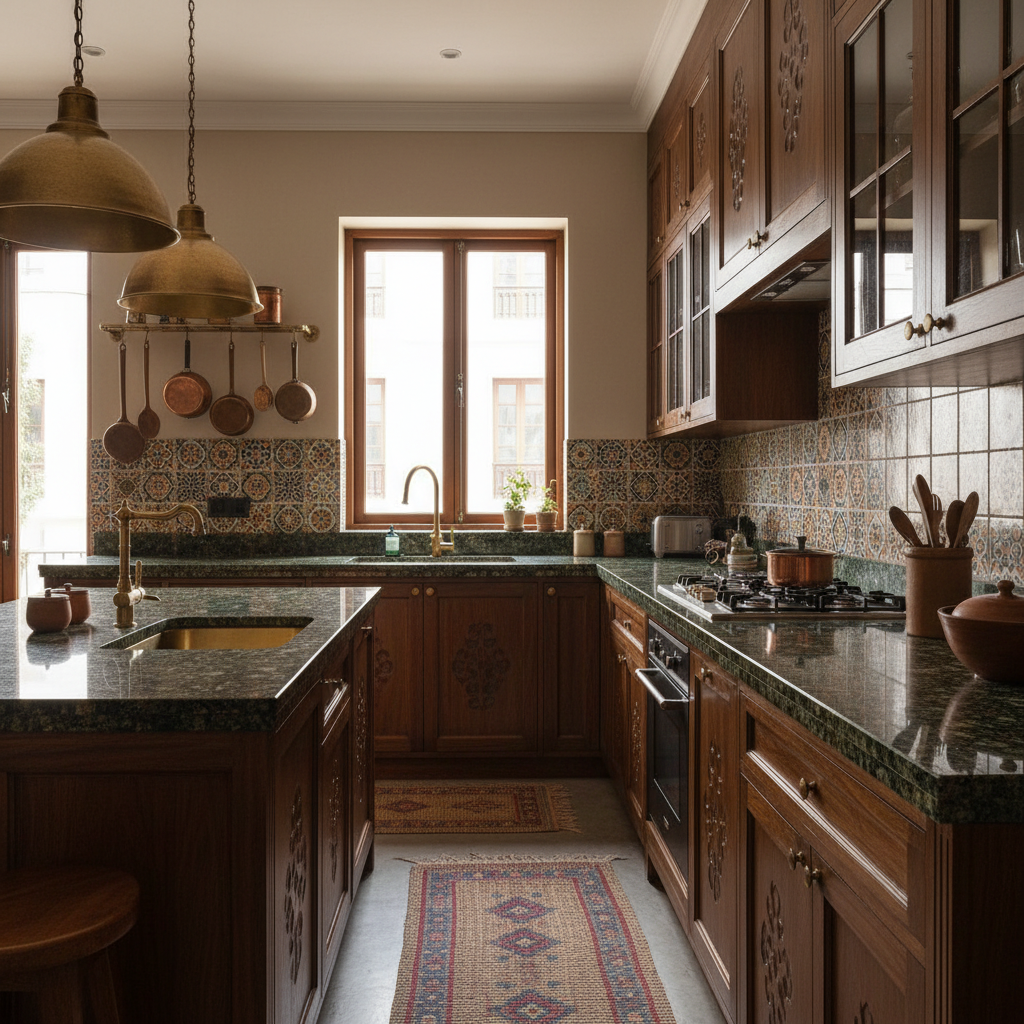
The foundation of an Indian kitchen lies in its choice of materials and the embrace of traditional motifs. Think about incorporating rich, dark polished woods for cabinetry, which not only offer durability but also bring a timeless elegance. Look for subtle carvings or latticework (jali patterns) on cabinet doors or a pantry unit to add an authentic touch without overwhelming the space. For countertops, natural stones like granite or marble are popular choices, known for their resilience and classic appeal, standing up well to the rigors of Indian cooking.
Beyond wood and stone, consider incorporating metal accents. Brass and copper, in particular, hold a significant place in Indian culture and can be used for hardware like cabinet pulls, faucets, or even decorative hanging pots and pans. These materials age beautifully, developing a unique patina over time that adds character and warmth. For homeowners in larger villas, a rustic stone wall or a specially designed niche with a traditional arch can provide a stunning focal point, while in smaller urban homes, a feature backsplash with intricate Indian tile patterns can achieve a similar effect.
Smart Layouts and Functional Storage for Indian Culinary Needs
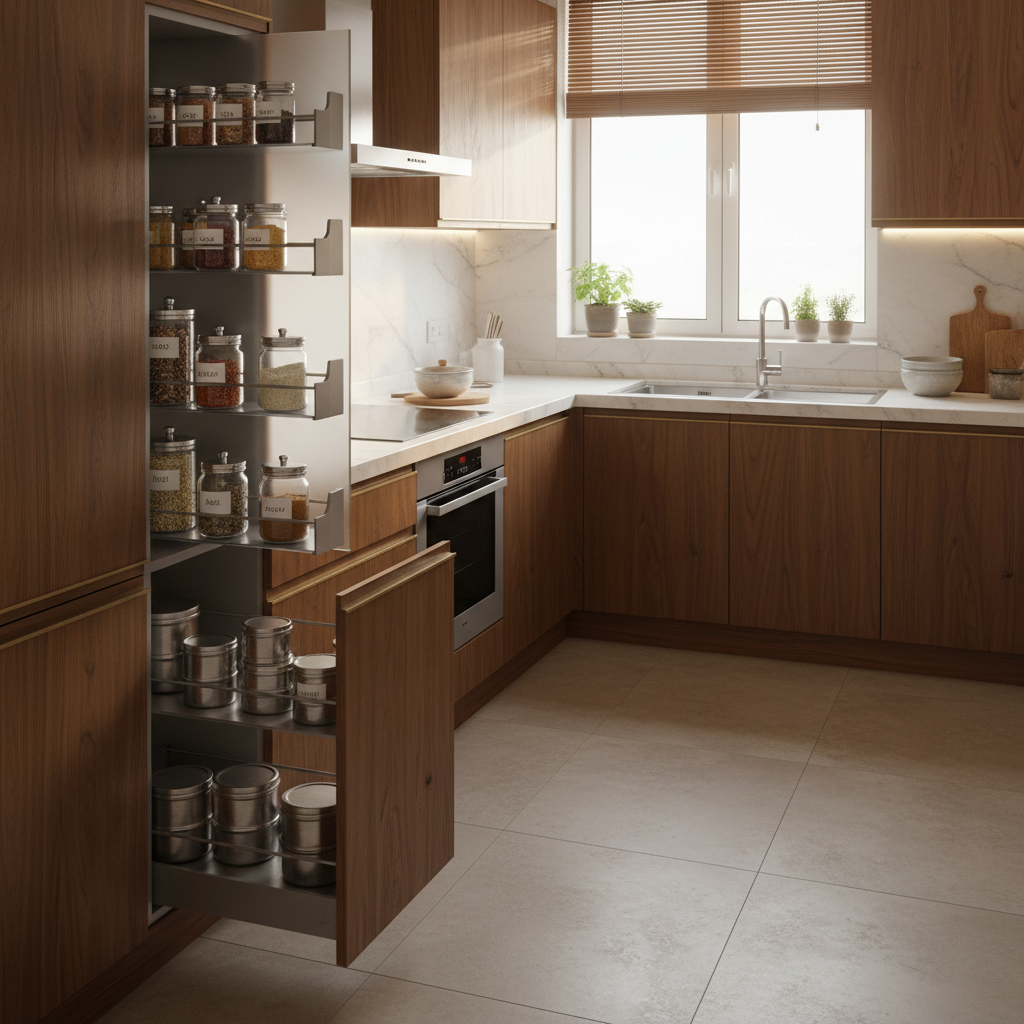
Indian cooking demands a kitchen that is highly functional, with specific requirements for storage and workspace. A well-planned layout is crucial, whether it's an L-shaped kitchen in an apartment or a U-shaped design in a larger home. Ensure ample counter space for kneading dough, chopping vegetables, and accommodating various appliances like mixers, grinders, and pressure cookers that are integral to daily cooking. An island counter can be a fantastic addition for extra prep space or as a casual dining area, especially in open-plan layouts.
Storage solutions need to be robust and thoughtful. Indian households often stock a variety of spices, grains, and pulses, necessitating dedicated pull-out spice racks, deep drawers for larger utensils, and pantry units for bulk items. Consider tall units for broom storage or integrated appliance garages to keep the countertops clutter-free. For families that prefer to sit on the floor for meals, dedicated low-height storage for dining mats or even a small foldable table can be a practical addition. Even in compact urban homes, smart modular kitchens with corner units and vertical storage can maximize every inch, ensuring everything has its place and is easily accessible.
Vibrant Color Palettes and Thoughtful Lighting
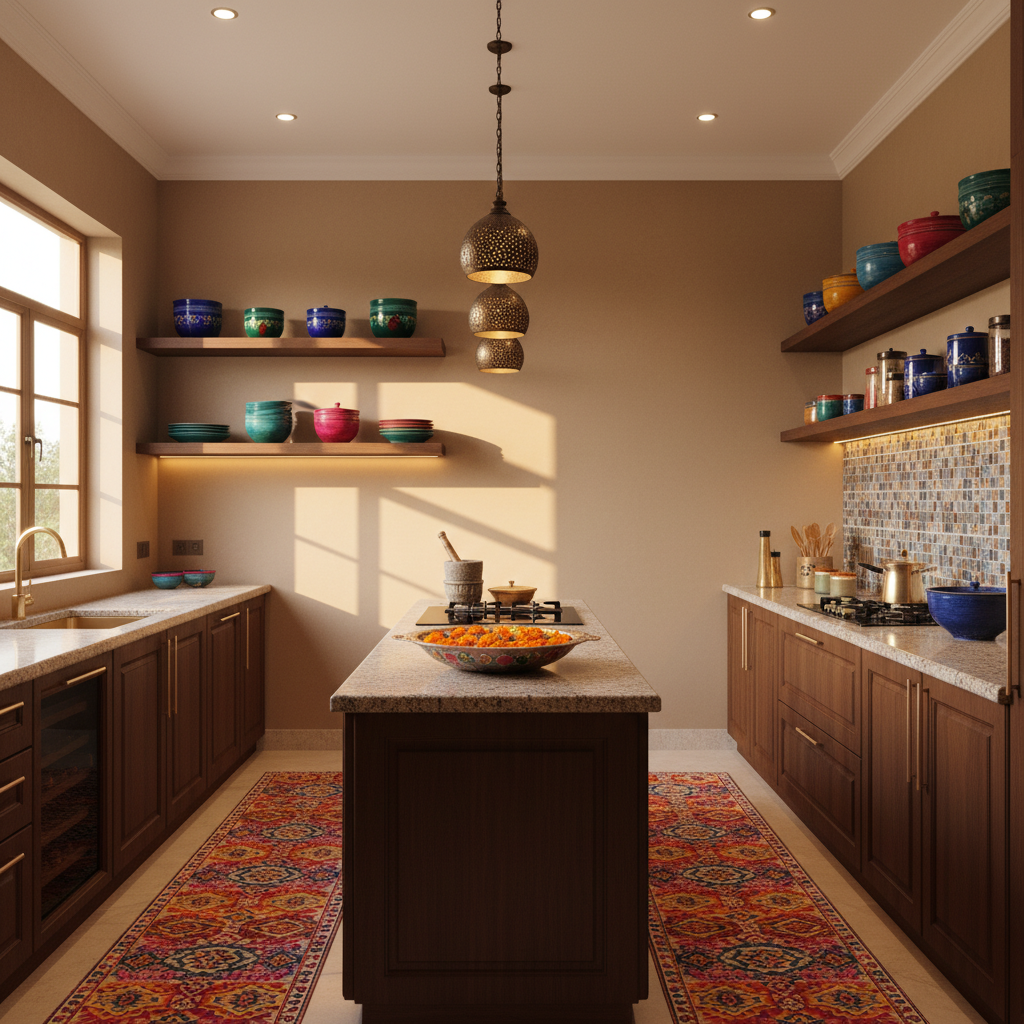
Color plays a pivotal role in Indian design, and the kitchen is no exception. While vibrant reds, oranges, and deep blues are classic choices, you don't have to limit yourself. Consider a base palette of earthy tones like terracotta, mustard yellow, or even a serene olive green for walls or larger cabinet sections. These can be beautifully complemented by pops of jewel tones in your backsplash tiles, accessories, or even a feature wall. For a more contemporary Indian look, a combination of muted pastels with rich, dark wood can create an elegant and inviting atmosphere. The key is to create a balance that feels lively yet harmonious, reflecting the warmth of Indian hospitality.
Lighting is equally important for both functionality and ambiance. Maximize natural light wherever possible, as it makes the space feel larger and more inviting. Supplement this with layered artificial lighting. Task lighting under cabinets is essential for food preparation, while overhead ambient lighting ensures overall brightness. Don't forget decorative lighting; a traditional pendant lamp over the dining area or intricate wall sconces can add a touch of traditional charm and create a cozy atmosphere during evening meals. For compact urban homes, clever use of LED strip lighting can highlight architectural features and add a modern touch.
Decorative Accents and Personal Touches
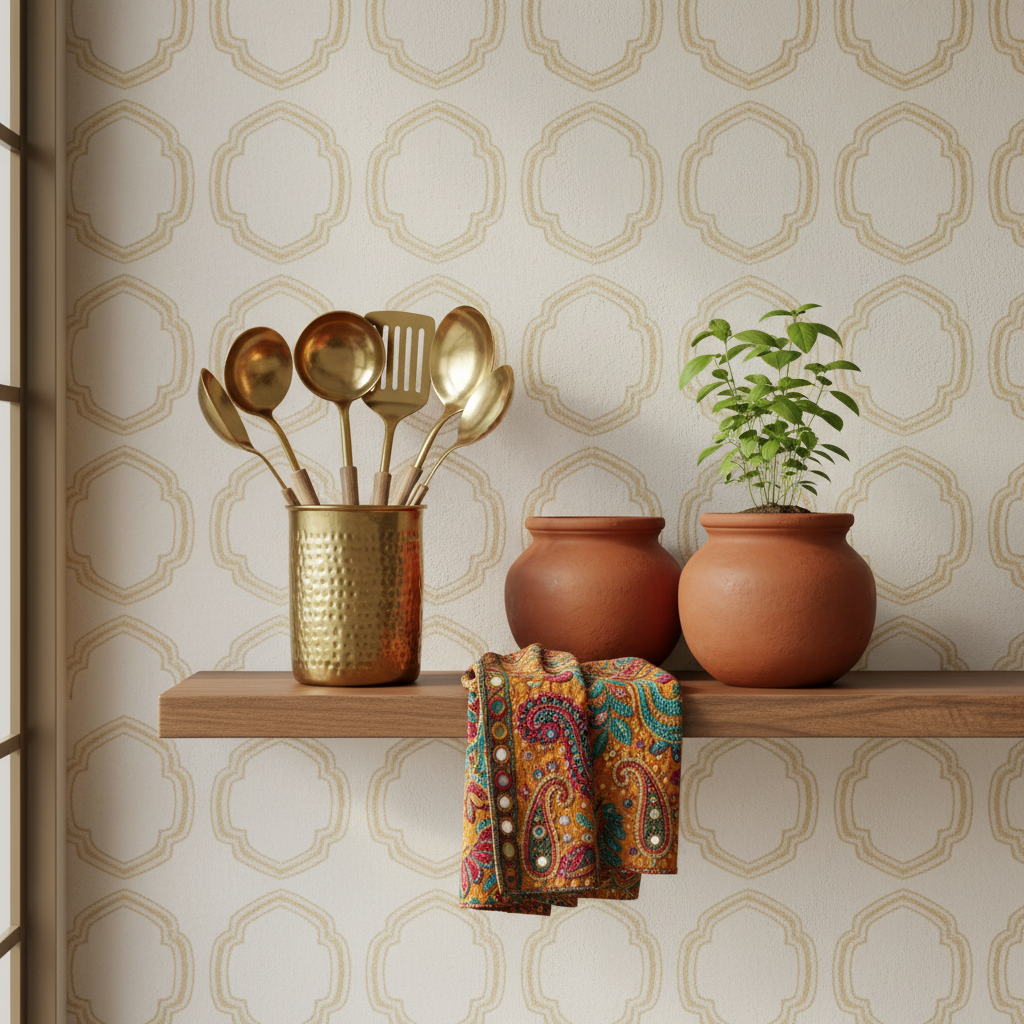
The true essence of an Indian kitchen often comes alive through its decorative elements and personal touches. Displaying traditional brass or copper cookware, whether on open shelves or hanging from a pot rack, instantly adds character and cultural flair. Terracotta pots, ceramic jars for pickles (achar barnis), or even beautifully woven baskets can serve both functional and decorative purposes. Consider incorporating textiles like hand-embroidered kitchen towels or a colorful runner rug to add softness and texture to the space.
Adding a small indoor plant, such as a curry leaf plant or a money plant, can bring a touch of greenery and freshness. For those with a spiritual inclination, a small, discreet puja unit or shelf for deities can be seamlessly integrated into the kitchen design, keeping it sacred yet functional. These small details, carefully curated and reflective of your personal style and regional influences, are what truly transform a kitchen from a mere cooking space into a vibrant hub that tells a story and feels authentically Indian, welcoming to all who enter.
Conclusion
Designing an Indian kitchen is a journey of blending tradition with modern needs, creating a space that is efficient, beautiful, and deeply rooted in culture. By thoughtfully choosing materials, optimizing layouts for practical Indian cooking, embracing vibrant colors and layered lighting, and personalizing with meaningful accents, you can create a kitchen that truly feels like the heart of your Indian home. Whether your home is a contemporary apartment or a sprawling traditional house, these ideas offer a pathway to a kitchen that is both functional and aesthetically rich.